Fast Or Slow, God Is Always At Work

Image by Valiphotos from Pixabay

If you look out the (virtual) window here at The Faith Cafe, you can see the leaves starting to change colour on the trees outside.

The tops of the maple trees are starting to blush with red. There’s a hint of yellow among the linden leaves. And the sumacs are beginning to fire up in vivid shades of orange.

This change creeps in gradually, however. At first, you barely notice fall coming on. Weeks from now, though, the trees will be ablaze in vibrant yellows, oranges, and reds. The difference from how they look today will be dramatic.

Oftentimes, I think this is the way God works in our lives.

He is slowly but surely leading us through a process of change and sanctification.

We may not notice that aspects of our character are being transformed, because the change is so gradual. One day, however, you look up and realize how far you’ve come and what amazing things God has done in your life.

Read more

Watch the Impossible Happen

Image by Josef Pichler from Pixabay

They say that it’s impossible for bumble bees to fly.

The theory goes that their weight and size are too great for their tiny wings to support, so according to the laws of aerodynamics they shouldn’t be able to get off the ground.

The only problem is, no one has told the bumble bees that.

They seem to have no difficulty in buzzing about in the air from flower to flower, collecting pollen and nectar to bring back to the hive.

So how do they do it, when physics would seem to suggest that they can’t?

For a long time, this was a mystery to us. Eventually we discovered that bumble bees actually don’t defy the laws of aviation: they simply fly in a different way than a plane or bird does.

We learned that the propeller-like way they beat their wings creates an invisible force above them, like a mini-tornado or -hurricane. This vortex actually sucks them upward, giving them lift in spite of their weight.

There was more going on than met the eye, which allowed the “impossible” to happen.

Likewise, when we believe in God, there is more going on in our lives than we’re aware of.

When God is working in your life, sometimes He will cause the impossible to happen, even when you can’t see how it could.

Read more

Plant the Seeds of Your Dreams

Vintage seed packets. Photo by Douglas Coulter on Flickr. CC BY-NC-SA 2.0

If you’re a gardener, you probably have a stash of seeds tucked away.

I certainly do. I have a special bin in a cupboard where I store all my seed packets:

Envelopes containing seeds I’ve harvested over the years from plants in my garden. Seeds that friends have collected from their own gardens and then passed on to me, along with handwritten notes about the plants.

Packets of seeds I’ve bought the Botanic Garden’s seed fairs that look intriguing: seeds of rare plants, unusual colours of better known plants, or hard-to-find heirloom varieties of vegetables or flowers.

I have a veritable treasure trove of seeds in my cupboard!

There’s only one problem:

Those seeds are doing me absolutely no good sitting in a bin on a shelf.

I may take the packets out from time to time and look rapturously at the photos on the front. I might imagine how nice it would be to grow such gorgeous flowers or unusual veggies.

But until I put those seeds in the ground, all they are is wishful thinking and pretty pictures.

If I don’t take a step of faith and plant my seeds, I’ll never get a harvest.

Similarly, we sometimes leave our dreams and desires on a shelf, so to speak.

Read more

The Best Fire Protection

Baked Alaska dessert set alight. Image by Vxla on Flickr. CC BY-2.0

Baked Alaska is one of those desserts that seems like it will end in disaster.

This dessert involves covering a core of ice cream and cake with meringue and baking it at 450-500 degrees Fahrenheit. Really.

Who puts ice cream in a hot oven anyway?

Surely it will result in a melted mess, and you’ll be spending the next hour resentfully scrubbing out your oven.

But Baked Alaska will surprise and amaze you.

When you take this dessert out of the oven after a few minutes, you find that the meringue has cooked and slightly browned, but the ice cream underneath it is still cold and has retained its firm shape. The ice cream inside the “igloo” has remained untouched by the intense heat.

It seems miraculous, because you’d think that ice cream would melt when it came anywhere near temperatures that high. It’s not actually a miracle, however, but rather a clever application of physics. The dessert was invented in the 1800s by American physicist Benjamin Thompson, who was investigating the insulating properties of whipped egg whites.

If you want a genuine example of miraculous protection from a hot oven, you need to go the book of Daniel in the Old Testament.

Read more

Bring Out The Big Guns

The Tsar Cannon, the Kremlin, Moscow.
Image by Tatyana Kazakova from Pixabay

Have you ever had a day when you simply needed chocolate?

Maybe you faced some problems, and needed a pick-me-up. Or you were dealing with a heartbreak and needed a balm for your ragged emotions.

And you knew that milk chocolate just wouldn’t cut it, let alone white chocolate.

It required the stronger stuff. You needed to bring out the big guns to help you cope with your challenges:

Dark chocolate.

Only the intense flavour and strength of chocolate with over 80% cocoa solids would do the trick. Nothing else would suffice.

Sometimes we reach a similar point in our spiritual lives, too.

The Christian life isn’t all a bed of roses. Oftentimes we face desperate circumstances, and we may find ourselves in a heap on the floor, crying our eyes out.

Maybe we’ve received a scary diagnosis from the doctor. We might have been let go from our job. Or our family might be in crisis: our marriage is in tatters or our children have gone astray.

We need help that is grounded in the gritty reality of what we’re facing. Sunny bromides like “Don’t worry, be happy” just won’t cut it.

We need to bring out the big guns.

We need the Psalms.

Read more

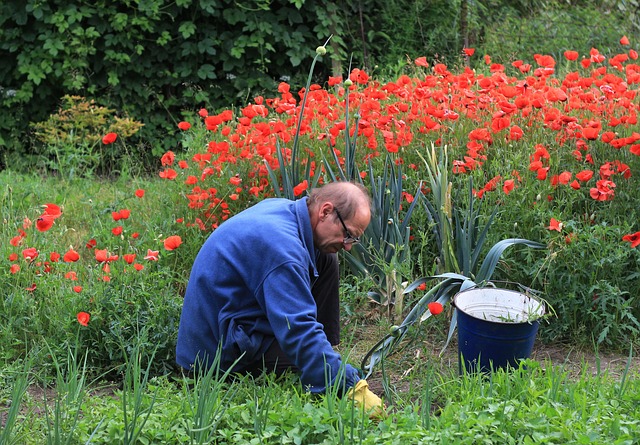
Weeding, Like Forgiving, Never Ends

Weeding the garden, like forgiving, is a task that’s never-ending.

We can’t simply say, “I weeded last week, so I’m done now. I won’t need to weed for the rest of the season.”

Every gardener know that the weeds will keep cropping up. The job of weeding is one that lasts for as long as you have a garden.

So it is with forgiving those who have offended or hurt us. Forgiving is not optional for believers: we are to forgive others as God has forgiven us.

But sometimes we think that it’s a “one-and-done” effort. We grudgingly forgive someone once, and assume we’re done with it.

Inevitably, though, we learn that it doesn’t work that way. The next week, we might ruminate about what they did to us and get mad all over again. We find there’s still a root of bitterness in our heart, and we have to forgive them once more.

Like weeding, the duty to forgive is ongoing. It may require more “rinse and repeat” cycles than you might imagine.

Read more

Don’t Let Fear Get The Better Of You

Image by mohamed Hassan from Pixabay

Do you have a fear of bugs?

Many of us do, and I don’t mind admitting that I’m one of them.

Finding a bug in the house instills terror in me. I’m convinced the bug is out to get me, lying in wait to murder me.

I’m tempted to have armed police arrive at my door to deal with the “intruder.” It takes all the self-control I can muster to refrain from dialling 911.

People tell me I’m being irrational. After all, humans are thousands of times bigger than bugs. Insects are probably more afraid of us than we are of them, right?

But I don’t see it that way, so I’m afraid to confront them.

I’ve fallen into the trap of letting my fear get out of proportion to the problem.

Many of us make this mistake. We let fear get the better of us, and it hobbles our responses to life’s challenges.

In ancient times, the children of Israel were no exception.

Read more

Amplify The Signal

Image by Free-Photos from Pixabay

Does your dog or cat come running when it hears the can opener?

Does your husband?

I guess we all tune in to sounds that are important to us, don’t we?

Parents are able to zero in on the specific cry of their child at a playground. They’re able to filter out the sounds of other children to focus on their own.

If you drop some coins on the floor, everyone’s head swivels toward the sound. Our ears strain out the other ambient noises in the environment and prick up at the sound of money tinkling.

Obviously, our family and money are things that are important to us.

But what about the messages that God is trying to send us?

Do we tune in to those with as much attention?

Or are there so many distractions in our lives that we’re unable to focus on the character of God and His love for us?

Maybe we need to adjust the signal-to-noise ratio in our lives.

Read more

Cleaning Tips From The Bible

Image by Carola K. from Pixabay

If your Mom is like mine, she’s probably given you some handy cleaning tips over the years.

She (or your Dad or caregiver) may have told you that you can use baking soda, vinegar or lemon juice as natural cleaning products.

She might have even told you about some surprising substances you can use to clean household items, like Coca-cola, mayonnaise, toothpaste or ketchup.

You may have been taught the secret to getting blood stains out of clothes: wash the fabric in cold water only. This is counterintuitive, because it’s the opposite of how you treat most other stains.

In the case of blood, however, heat will only set the stain and make it harder to remove.

It’s good to know how to deal with pesky stains: what substances to use to clean things, and what substances and methods not to use.

For instance, you’d certainly never use blood itself to clean anything.

Or would you?

Scripture tells us that there’s a special case where blood washes things whiter than snow:

When it’s the blood of Jesus.

Read more

Nose Down, Full Throttle

Image by cocoparisienne from Pixabay

If you’re a pilot, there are a lot of things to worry about up in the skies.

Stalling your aircraft is one of them.

If your plane no longer has enough lift to keep you flying, it will falter and enter an aerodynamic stall. You need to take corrective action, and fast.

So how does a pilot get out of a stall?

Nose down, full throttle.

This means the pilot must push the nose of the plane downward and give the engines full power.

To a layperson, this course of action seems scary and counter-intuitive. Surely the last thing a pilot should be doing when they’re in trouble is aiming the plane toward the ground at full speed?

It may seem nerve-wracking, but it’s the only way to get out of a stall. Going nose down, full throttle will give the plane the needed airspeed to regain lift and get out of the stall. Then, the pilot can resume level flight and continue on the desired flight path.

In life, too, sometimes we need to do something that scares us a little in order to get out of trouble.

Like when we sin or make a mistake that we know would displease God.

Read more