
At Christmas, do your thoughts turn to Easter eggs?
Probably not, unless you’re an avid player of video games or a fan of certain movie franchises.
In the cinematic and computer worlds, an “Easter egg” is a secret message, image, or feature hidden in software, games, or films.
With video games, an Easter egg might be an unpublished feature or hidden property of the game that is normally hidden from the public eye. It can only be accessed by certain button combinations that are not common knowledge.
Easter eggs inserted by filmmakers in their works might involve a jokey detail or an obscure reference to a previous movie by the same auteur. Only the most alert audience members catch them.
For instance, famed film director Alfred Hitchcock had a penchant for appearing in cameo roles in his own movies. In 39 of the 52 films he directed, he left “Easter eggs” consisting of himself in blink-and-you-miss-it bit parts.
Are there any “Easter eggs” to be found hidden in the Christmas story in the Bible?
Actually, there are.
If you read the Scriptures closely, you’ll find that there are foreshadowings of Easter sprinkled throughout the accounts of Christ’s miraculous birth.
For instance, let’s look at the gifts that the Magi (or “wise men”) brought to the Christ child: gold, frankincense and myrrh (Matthew 2:11).
It’s easy for us to figure out what gold represents: royalty and kingship. This precious metal brings to mind golden thrones within golden temples.
Frankincense is a little less familiar to us today, but in ancient times it was associated with the incense that was used for the worship of a divinity.
But what about myrrh? This tree resin was a key ingredient in the mixture of spices that was used to prepare a body for burial.
So included among the gifts given to the infant Jesus was a substance that alluded to his death. A hint of Easter enveloped within Christmas.
Another “Easter egg” present in the Christmas story is contained in the message that an angel gave to Joseph.
“As he considered this, an angel of the Lord appeared to him in a dream. ‘Joseph, son of David,’ the angel said, ‘do not be afraid to take Mary as your wife. For the child within her was conceived by the Holy Spirit. And she will have a son, and you are to name him Jesus, for he will save his people from their sins.’ ” (Matthew 1:20-21)
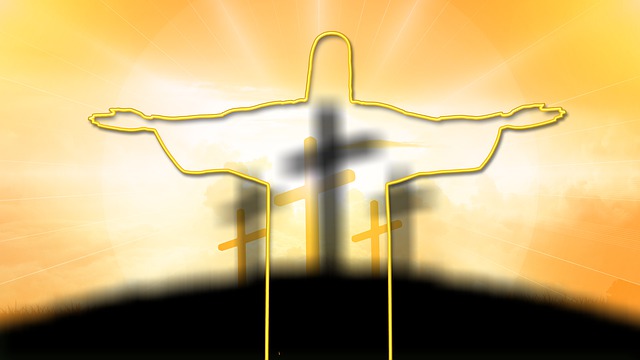
In the last line the angel is making an allusion to Jesus’ atoning death on the Cross. But Scripture doesn’t specifically state that Joseph and Mary realized that their son would one day die in that way. They both knew their Torah, however, and understood that without the shedding of blood there is no remission of sins. So they must have wondered: how would their son save his people from their sins without shedding his own blood? Did they make this connection in their minds?
Yet another hint of Easter is found when Joseph and Mary bring the baby Jesus to the Temple to be dedicated to the Lord. A godly man named Simeon was there, and he praised God that he had been given the privilege of seeing his Messiah before he died. And yet in his joy he spoke some difficult words to Mary:
“And a sword will pierce your own soul too.” (Luke 2:34-35)
When did a “sword” pierce Mary’s soul? When she saw her son pierced and crucified at the first Easter.
So we see that Easter is inextricably linked to Christmas.
And this makes sense, because without a resurrected saviour Jesus’ birth isn’t terribly noteworthy. It’s because he rose from the dead at Easter that we can celebrate his birth with such gratitude at Christmas.
So let’s remember that the risen Jesus is the hope of our salvation, and the true reason for this blessed season!
© 2023 Lori J. Cartmell. All rights reserved.
 The Faith Cafe